Pose, health and link context
Position, orientation, localization state, health signals and other bounded platform context can be shared with peer systems.
TacWing-X uses authenticated federation to move bounded platform state and world observations between robotic systems. ROS 2 can expand what the operator knows without becoming a back door around the platform's own command boundary.

The bridge is for bounded operational information. It is intentionally different from exposing a generic remote motor or flight-control topic.
Position, orientation, localization state, health signals and other bounded platform context can be shared with peer systems.
Companion sensors can contribute normalized observations while retaining source and freshness information.
Mission events and selected world-state information can be distributed without requiring raw video to traverse the federation layer.
The ROS 2 bridge sits beside the platform runtime, not above it. Incoming observations can inform the canonical world model; physical operations still pass through TacWing-X governance and the platform-specific adapter.
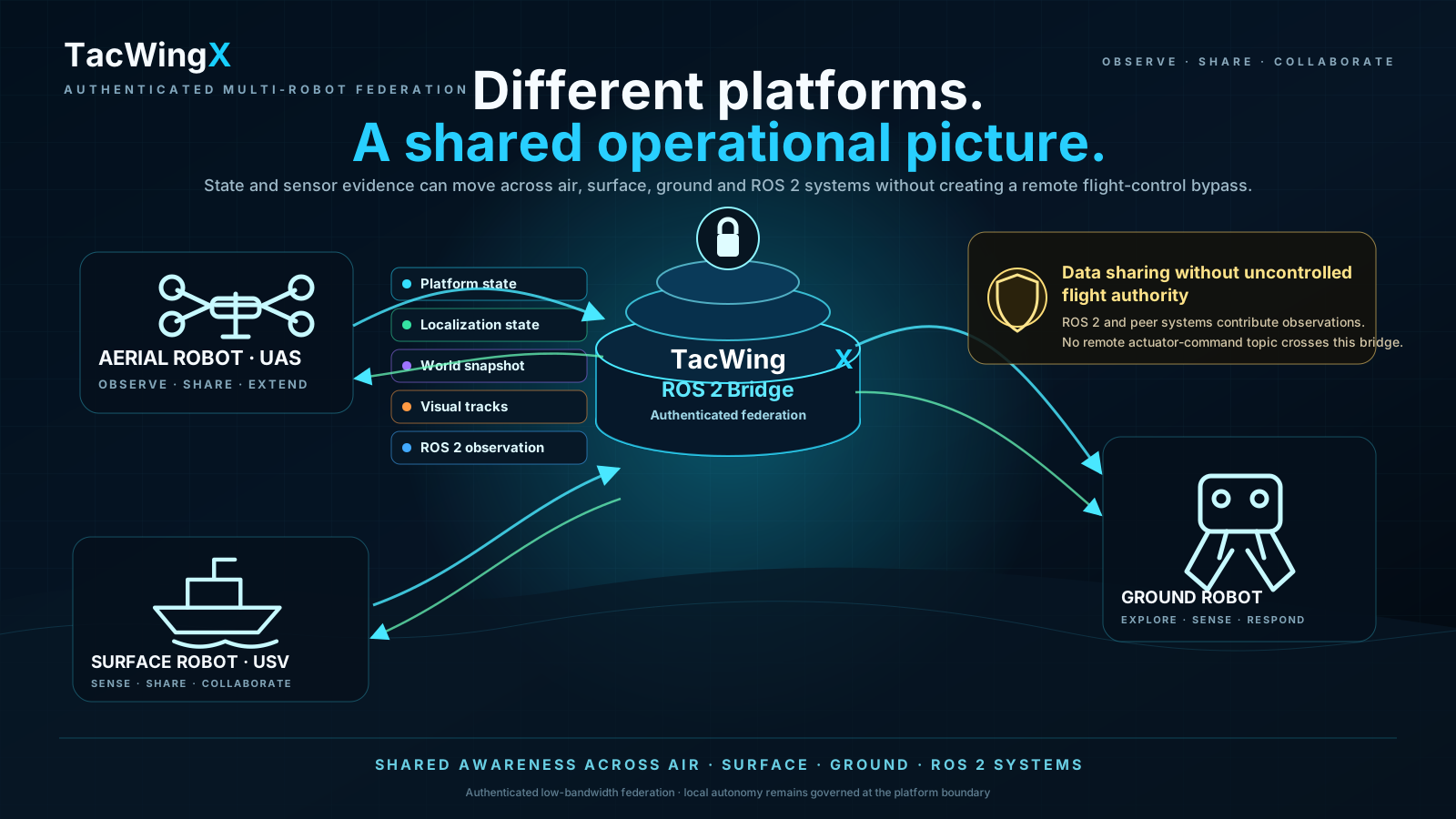
The illustrations below show the kinds of mission patterns the architecture is designed to support. They are architecture concepts, not claims of customer deployment.

Aerial perspective, surface persistence and ground-level sensing can complement each other without collapsing every platform into a single actuator authority.
Each system contributes what it can sense well. TacWing-X keeps source identity, freshness and authority boundaries explicit while presenting a common operational picture.
Each platform or companion computer produces its own bounded telemetry and sensor observations.
Federation messages are checked, normalized and carried with source context.
Accepted observations can enrich the canonical operational picture without inheriting actuator authority.
The operator sees a more complete picture while each platform keeps its own governed physical-control boundary.

The federation layer is about shared awareness first, not remote control by default.
The Meta Quest companion is a separate presentation surface for authenticated platform and world information. It does not create another aircraft-control path.